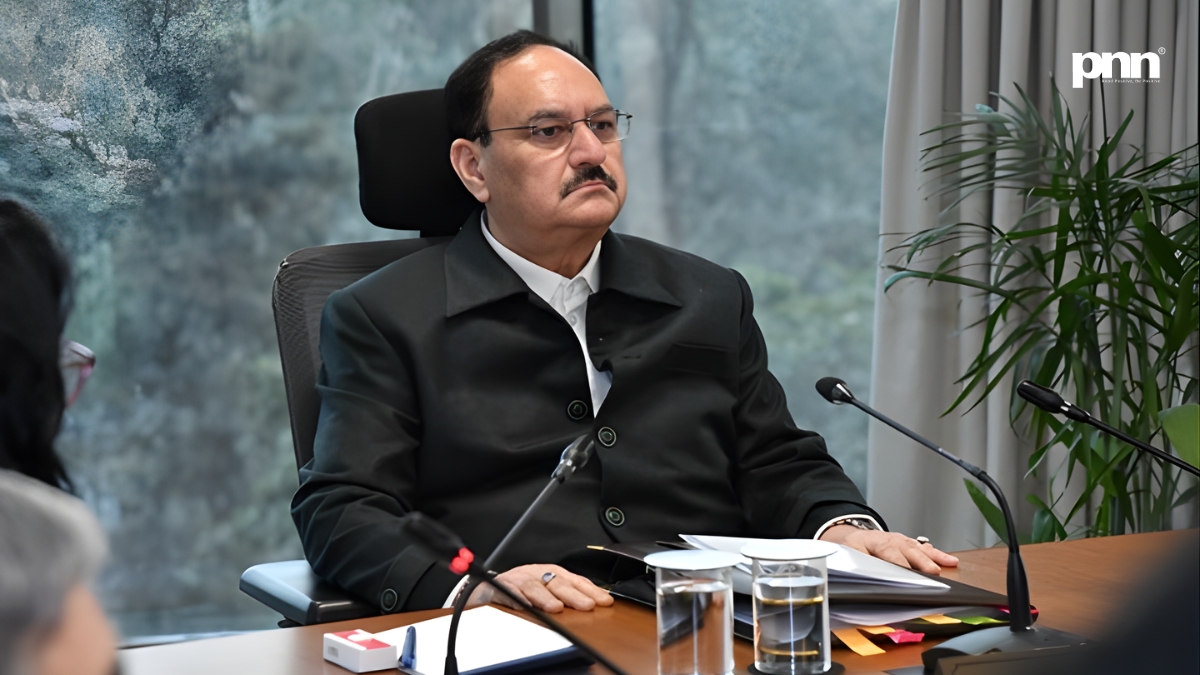
TB Mukt Bharat: TB Mukt Bharat is no longer just an ambition. Union Health Minister Jagat Prakash Nadda has set a clear deadline. India plans to eliminate tuberculosis by 2027, five years ahead of the global target.
Chairing a high-level review meeting with officials from Madhya Pradesh and Chhattisgarh in New Delhi, Nadda called for mission-mode reforms across the health system. The message was blunt. Incremental fixes will not eliminate TB. Structural reform might.
TB Mukt Bharat 2027 is not a slogan. It is a deadline with consequences. India carries one of the world’s highest TB burdens. Every delay costs lives, productivity, and public trust.
Mission Mode or Mission Impossible
Mission mode is bureaucratic shorthand for urgency with accountability. Nadda’s instructions reflected that mindset.
He pushed for accelerated reforms, tighter monitoring, and real-time oversight. No vague targets. No paper compliance. Results.
The focus was not only on TB but on the foundations of public healthcare delivery. Drug regulation. Diagnostics. Hospital management. Technology integration.
In other words, fix the system if you want to fix the disease.
Fix the Supply Chain or Forget the Promise
One of the sharpest interventions focused on drug regulation and supply chains.
Free Drugs and Free Diagnostics schemes already exist. On paper, they are strong. On the ground, gaps remain. Stock-outs. Delays. Weak monitoring.
Nadda directed both states to plug these gaps and strengthen end-to-end tracking. He also confirmed that the Centre is working with IIM Ahmedabad to overhaul procurement logistics, transparency, and accountability.
This matters more than it sounds.
A missed drug dose is not a minor inconvenience in TB treatment. It fuels resistance. It prolongs illness. It undermines elimination goals.
TB Mukt Bharat 2027 collapses without a supply chain that actually delivers.
Diagnostics First. Everything Else Later
If TB is the enemy, diagnostics are the radar.
Nadda called quality diagnostics the backbone of effective healthcare. He pushed for strengthening diagnostic services across primary, secondary, and tertiary levels.
Early detection decides outcomes in TB. Late diagnosis spreads infection. Weak diagnostics waste time.
This is where India often stumbles. Machines exist but are underused. Facilities exist but are unevenly distributed. Data exists but is not integrated.
The directive was clear. Strengthen diagnostics everywhere. Not just in cities. Not just in flagship hospitals.
Because TB does not respect geography.
Hospitals, Blood Banks, and the Regulation Gap
The Health Minister also zeroed in on hospital administration and regulation.
Professionalise hospital management. Tighten oversight of blood banks. Enforce safety protocols across systems.
This is not administrative nitpicking. Weak regulation leads to unsafe practices, preventable infections, and public distrust.
TB patients already face stigma. A chaotic hospital experience only pushes them further away from treatment adherence.
Better systems lead to better outcomes. This is basic. And overdue.
Tele-medicine as a Force Multiplier
Technology was not treated as a buzzword. It was positioned as a solution.
Nadda urged wider integration of tele-medicine to ensure specialist access in remote and underserved areas.
For TB care, this matters. Specialist consultations, follow-ups, and adherence monitoring can happen without forcing patients to travel long distances.
Tele-medicine is not replacing doctors. It is extending their reach.
If implemented properly, it could quietly become one of the strongest tools in the TB Mukt Bharat 2027 playbook.
Districts, Blocks, and the Real TB Battlefield
TB elimination does not happen in conference rooms. It happens at district and block levels.
Nadda stressed mission-mode interventions at these levels with intensified screening, timely diagnosis, treatment adherence, and nutritional support.
Each of these elements is non-negotiable.
Screening finds cases. Diagnosis confirms them. Treatment cures them. Nutrition sustains recovery.
Miss one link, and the chain breaks.
This district-first approach recognises reality. TB is hyper-local. Solutions must be too.
Jan Bhagidari and Political Accountability
One of the more interesting proposals was political sensitisation.
Nadda suggested workshops for MLAs to improve coordination with Block and Chief Medical Officers. The goal is accountability through Jan Bhagidari.
Public participation is not soft governance. It is pressure.
When elected representatives understand health metrics, follow-ups improve. When communities are involved, outcomes follow.
TB elimination is not only a medical challenge. It is a governance test.
Why This Meeting Matters Beyond Two States
The review focused on Madhya Pradesh and Chhattisgarh, but the signals were national.
Strengthen public health systems. Improve patient satisfaction. Enhance regulatory oversight. Accelerate national health programmes.
TB Mukt Bharat 2027 is the headline. System reform is the subtext.
India has declared intent before. This time, the operational details are sharper.
The clock is ticking. The tone has changed.
Operational guidance document on TB Mukt Bharat Abhiyan — detailed strategy and implementation background. Guidance Document on TB Mukt Bharat Abhiyan (MOHFW)