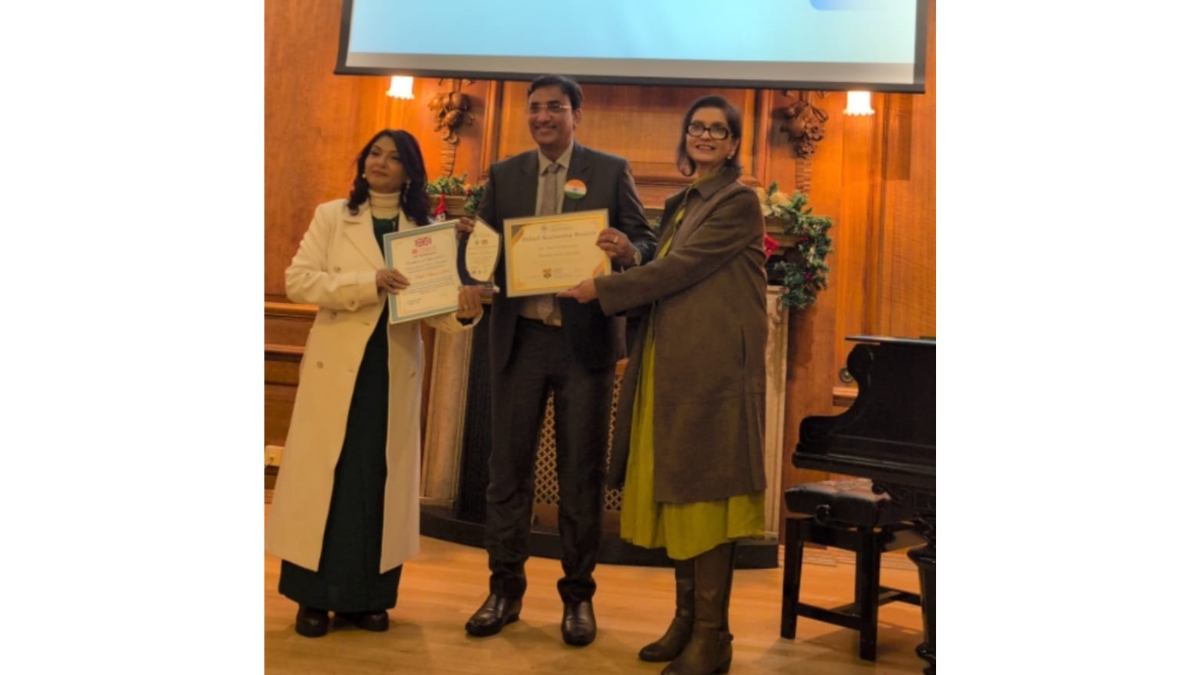

Dr. S.S. Bansal – Senior interventional cardiologist & CMD SSB Heart and Multispecialty Hospital, Faridabad
Faridabad (Haryana) [India], April 21: Mr. Ramesh ( Name Changed), 62 years old male presented with severe angina on minimal exertion for the last many months. On angiography, it was found that the patient was having 2 out of 3 coronary arteries (arteries supplying blood to the heart muscle) RCA & LCX blocked completely & chronically with signs of the extreme complexity of the block as both the lesions were angulated, long, hard and calcified with bridging collaterals. His 3rd artery LAD was having a patent stent. His heart pumping power was very weak (EF 30%) but heart muscle for occluded arteries was viable. When such blocks are present, patients are often subjected to bypass surgery. Angioplasty in such cases is extremely difficult and requires lots of experience from the operator.
Even the most experienced Cardiologists in the entire world handle such complex blocks in this case both femoral arteries were also completely blocked making this route unavailable for intervention.
Attempting such a complex disease from the radial route (wrist artery) was a big challenge.
We tried to open these complex blocks with special hard CTO wires with the help of a special micro catheter through the radial artery of the wrist called radial artery Fortunately both the blocks could be opened completely non-surgically.
Successful Stenting to left circumflex, OM1, and right coronary double stenting was done using through radial route which made the procedure more challenging
Thanks to the great advancement in technology along with 26 years of my rich experience in the field which made me confident to take up the challenge and solve my patient’s problem.
This success creates hope for many patients who are either at very high risk for bypass surgery due to their co-morbidities or who don’t accept bypass surgery as an option
Chronic total, Occlusion was treated by bypass surgery in the past which was the only way to treat these difficult blocks but due to these novel techniques and evolved hardware inexperienced hands that too through the radial artery (wrist) is a boon for such patients with blocked leg arteries.
Successful opening of double complex CTO lesions through the Radial artery at the wrist is very difficult and done for the first time in the region.
The patient recovered very well and was discharged after 3 days in very good condition from the hospital. This has given us new hope for such patients with complex diseases.