
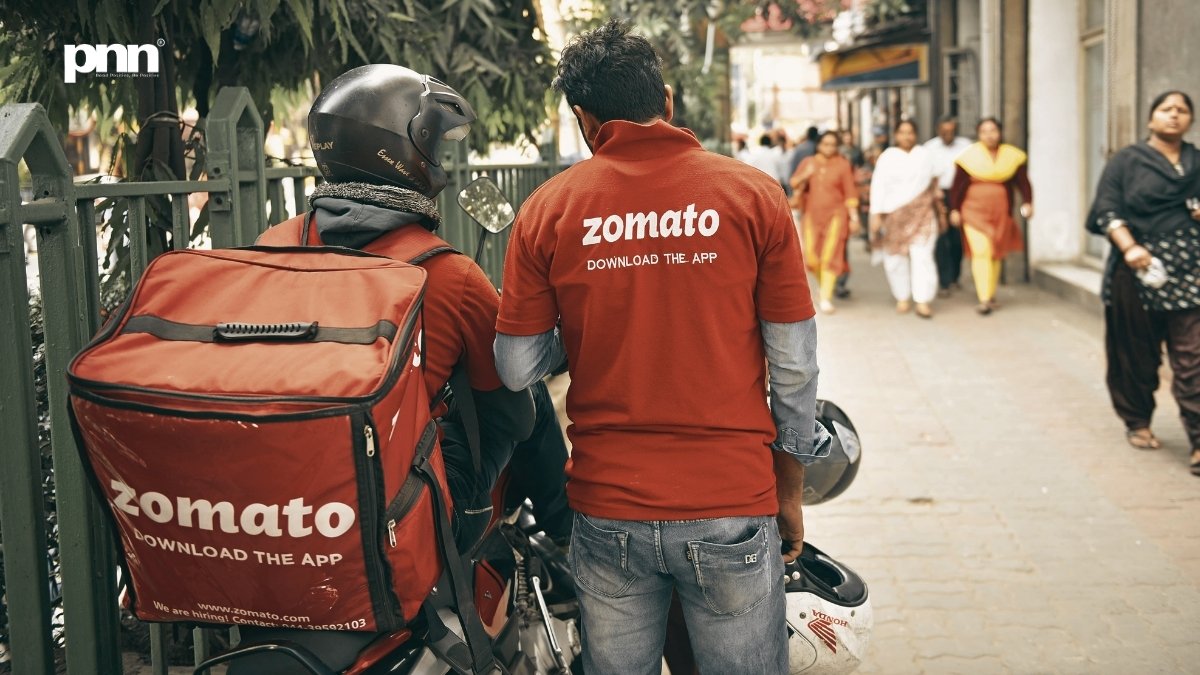
New Delhi [India], July 25: The e-commerce food delivery sector in India is in a new phase. It’s not just about customer acquisition or new city expansion anymore. Rather, businesses are more concerned about profitability. Food delivery platforms are turning to multiple revenue streams, including platform fees, delivery fees, restaurant commissions and advertising revenue, to boost their unit economics as order growth slows and investors call for better financial results.
In this background, the Competition Commission of India’s (CCI) recent order in favour of Eternal Ltd, the parent company of Zomato, has assumed more than a mere regulatory significance. The competition watchdog has given more clarity on one of the most important monetisation strategies of Zomato, by ruling that the platform fees and delivery charges are not an abuse of dominant position.
The grievance said that the restaurants were more expensive than the food ordered from the Zomato platform due to platform fees, delivery charges and the inflated menu prices. It also said that restaurants had to raise their prices on the platform as a result of Zomato’s commissions.
But the CCI rejected these allegations. It noted that online food delivery is a unique digital service comprising online ordering, payment, customer service and doorstep delivery. It was therefore not appropriate to compare prices on the platform directly with dine-in or takeaway prices, as consumers pay for convenience and digital infrastructure as well as the food. The regulator rejected the request for a detailed investigation because of the lack of prima facie evidence of abuse of dominance.
The move comes amid the online food delivery market in India is estimated to be worth $9-10 billion, with several industry reports predicting it will surpass $20 billion in the coming years. India now handles well in excess of three million online food orders each day, but the market is still relatively small compared to global markets and has plenty of room to grow.
Platform fees have become a more popular way to boost profitability as the market has matured. In 2023, Zomato implemented a ₹2 platform fee, which was then increased to ₹3, ₹5, ₹7 and now up to ₹10 per order in various markets based on demand. It may seem a small sum for any one user, but it can be a significant revenue source when multiplied by millions of transactions each month.
Even as Blinkit has grown to become a major player in the food delivery space, the role of food delivery in Eternal’s business continues to be crucial. Eternal’s food delivery segment had gross order value (GOV) of over ₹10,000 crore in the quarter ended March 2026, while Blinkit maintained a strong growth in quick commerce. Food delivery is one of the company’s biggest revenue streams and is a major contributor to its earnings, but it is also one of its fastest-growing businesses. Platform fees, in turn, are a key factor in maintaining margins and enabling ongoing investments in businesses, as they offer pricing flexibility.
The decision also provides comfort to the broader food delivery industry. Other platforms like Swiggy have a similar pricing structure, and global firms such as Uber Eats, Door Dash and Deliveroo also charge service fees, delivery fees and commissions, in addition to restaurant partnerships. The CCI’s decision indicates that such fee structures, by themselves, are not viewed as anti-competitive.
The order has been seen to lift an immediate regulatory cloud from the fee-based monetisation models by industry analysts. If the regulator had not done so, platforms might have had to rework their pricing models, when profitability has become one of the top priorities for listed internet companies.
Meanwhile, the ruling does not put an end to the sector’s regulatory investigation. Issues relating to marketplace practices, restaurant partnerships, algorithmic fairness and competition continue to remain under separate examination. The new order only covers platform fees, delivery fees and price comparisons.
The decision in many respects acknowledges the changing dynamics of the digital food delivery sector in India. Consumers are not just paying for food, they’re paying for technology, convenience and last-mile logistics. The CCI’s recognition of this distinction offers a degree of regulatory clarity for food delivery firms as they navigate a fiercely competitive landscape while striving for sustainable profitability and growth.